
Culture You Can Feel—but Also Measure


Everyone says “our culture is our strength,” but when the CEO asks for proof, HR is often left with scattered comments and a single engagement score. A clear workplace culture assessment changes that. It shows where your culture is enabling performance and where it is quietly pushing people out the door.
This article gives HR leaders and managers a practical, PULSE-inspired way to measure culture—so you can move from intuition and anecdotes to focused data, targeted action, and credible conversations with leadership.
Why Workplace Culture Assessment Matters Now
A strong culture is no longer a branding slogan; it is a measurable driver of retention, performance, and engagement. Research and global surveys consistently show that:
·Healthy cultures and high engagement link to significantly lower voluntary turnover and better business results.
·Toxic or unclear cultures are a top reason people leave, often before pay or role.
A structured workplace culture assessment makes this visible. Instead of “we think people are fine,” you can say, “here’s what people actually experience with leadership, communication, inclusion, and growth—and here’s how it varies by team and location.”
The PULSE View: What a Good Culture Assessment Covers
A strong assessment goes beyond generic engagement questions. A PULSE-style framework, like the one used by Incredible Workplaces (™), looks at multiple dimensions of organizational health:
· Purpose and Values – Do people understand and see values in daily decisions?
· Unified Communication – Is information timely, transparent, and two-way?
· Leadership – Are leaders approachable, fair, and aligned with stated values?
· Supportive Environment – How do people feel about well-being, recognition, and psychological safety?
· Innovation and Adaptability – Can people share ideas, learn from mistakes, and adapt to change?
This turns “culture” into specific, measurable areas, each with clear survey items and follow-up actions.
A 3-Step Practical Framework for HR Leaders
Step 1 – Get Clear on the “Why” and What You’ll Measure
Before launching any survey, align with leadership on why you’re doing a workplace culture assessment:
· Are you trying to reduce attrition, support a new strategy, or understand hybrid work?
· Who will see which results (executive team, HR, managers, all employees)?
· What level of transparency and follow-through are you committing to?
Step 2 – Run an Employee Pulse Survey People Trust
A good employee pulse survey is short, clear, and safe. To build trust:
· Explain why you are running this survey and how anonymity works.
· Use mobile-friendly, simple language and a clear completion time (e.g., 10 minutes).
· Have leaders sponsor the survey, not just HR, and commit to sharing high-level results.
This can be a full, PULSE-based culture survey once a year, with shorter quarterly pulses on a few critical questions to track movement.
Step 3 – Turn Data into 2–3 Concrete Culture Moves
After the survey, resist the temptation to drown everyone in charts. Instead:
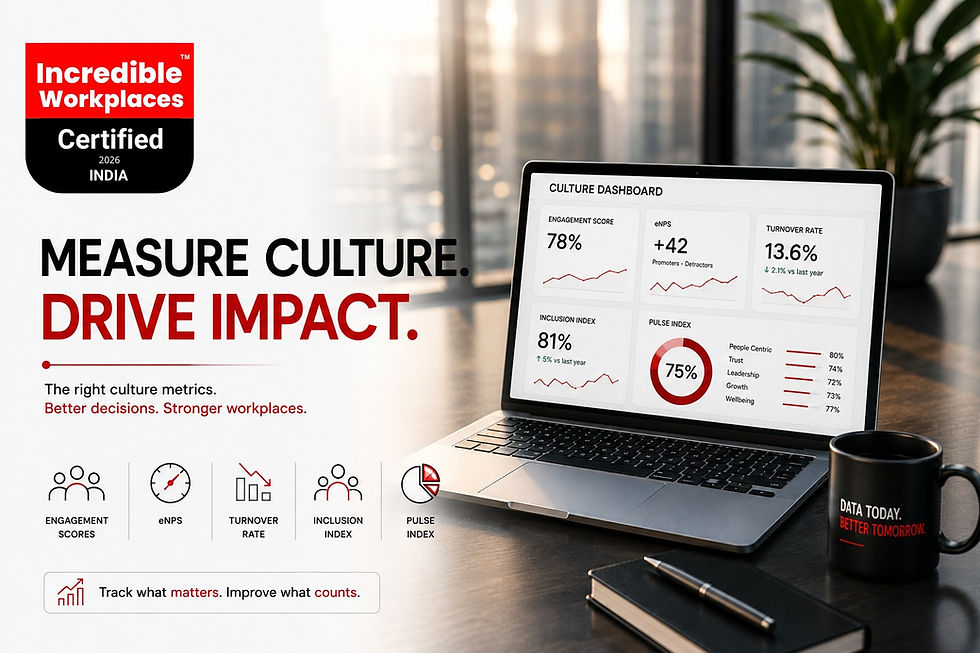
· Summarise a PULSE Index or similar score by dimension—what’s strong, what’s fragile.
· Identify 2–3 cross-organization priorities (e.g., “build better mid-level leadership,” “fix communication across functions”).
· Share team-level insights with managers and ask each team to choose one or two actions they will take in the next 90 days.
Examples of simple, high-impact actions:
· Weekly 1:1s between managers and team members with clear agenda.
· A monthly “Ask Me Anything” with business leaders.
· Team norms for meetings, response expectations, and decision-making transparency.
Quick Real-World Style Examples
· Global tech team: uses a PULSE-style survey to see where hybrid working is hurting collaboration. They discover clarity and meeting overload are the real issues, redesign meeting norms, and see communication scores rise in the next pulse.
· Regional bank: learns that some branches feel excluded from growth opportunities. They introduce transparent internal job postings and mentoring; inclusion and engagement scores improve and attrition drops among high-potential talent.
· Manufacturing plant: frontline teams report not feeling heard on safety and scheduling. Leadership creates regular listening huddles and adjusts shifts, leading to better psychological safety and lower unplanned exits.
In each case, the culture assessment moves quickly from numbers to one or two visible adjustments that employees can feel.
How Incredible Workplaces (™) and PULSE Make This Easier
You can build this from scratch—or use a proven, structured approach. Incredible Workplaces (™) supports organizations with:
· The PULSE Framework and PULSE Index to evaluate key culture dimensions with clarity and consistency.
· An integrated employee pulse survey and audit approach that gives both scores and stories.
· Workplace culture certification that validates your culture externally and strengthens employer branding.
· Advisory support to translate insights into practical leadership behaviours, manager routines, and employee experience improvements.
Conclusion and CTA: Take the PULSE, Then Act
A workplace culture assessment is not a report for the shelf; it is a decision tool. When you use a PULSE-style framework, run frequent, trusted pulse surveys, and commit to a handful of visible actions, culture becomes something you can manage—not just talk about.
If you want to move beyond intuition and truly understand (and improve) your workplace culture:
· Start with a PULSE-inspired workplace culture assessment across purpose, communication, leadership, support, and innovation.
· Partner with Incredible Workplaces (™) to apply the PULSE Framework, PULSE Index, and culture certification in your context.
· Use the insights to agree on 2–3 culture priorities and a simple 90-day action plan for leaders and managers.
That is how you make culture measurable, actionable, and an everyday competitive advantage—without overwhelming your people with an endless report.


Comments